

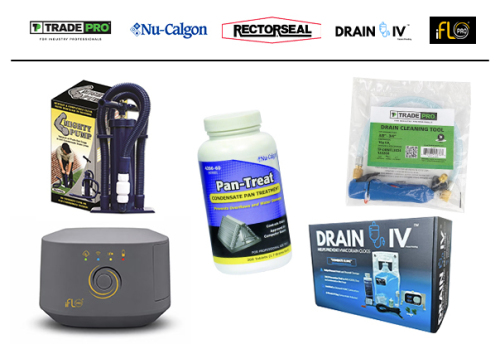
Some of the most important finds on a service call are the ones the homeowner never would have noticed.
Visible algae growth. A slow drain that’s one hot week away from backing up into the ceiling. You’ve seen it before. The homeowner has no idea it’s there.
That moment — when you find something the customer didn’t know to worry about — is where a good technician earns long-term trust. Not by upselling, but by doing the job completely. Finding the problem, explaining it clearly, fixing it on the spot, and making sure it doesn’t come back.
Here’s a practical framework for handling drain line issues when you encounter them in the field — the right tools for the situation, and what to put in place before you leave so the next tech (or the next season) doesn’t find the same mess.
What You’re Actually Looking At
Condensate drain lines operate in conditions that are ideal for biological growth — warm, dark, consistently moist. Over a full cooling season, algae, mold, biofilm, and dust accumulate inside the line and around the trap. In humid climates, that process happens faster than most homeowners realize.
What you find on a service call can range to a fully restricted line or standing water in the pan. Either way, the path forward is the same: clear what’s there, protect what’s next.
The difference between a technician who spots this and addresses it completely — versus one who notes it and moves on — is the difference between a callback in October and a customer who renews their maintenance agreement.
Continue reading “What’s Hiding in That Drain Pan — And What to Do When You Find It”